Elegant Business Cards Templates Designs: Streamlining Professional Print Production
In the landscape of professional networking and corporate identity, the business card remains a critical tangible asset. However, the design and production process often suffer from inefficiencies, leading to missed opportunities or poor print quality. Utilizing Elegant Business Cards Templates Designs bridges the gap between creative vision and print-ready execution. This specific template package is engineered to serve as a foundational asset for designers, entrepreneurs, and business owners who require a reliable, high-quality starting point for their stationery needs. It is not merely a collection of graphics; it is a structured workflow tool designed to ensure that the final product meets rigorous industry standards.
Technical Specifications and Production Readiness
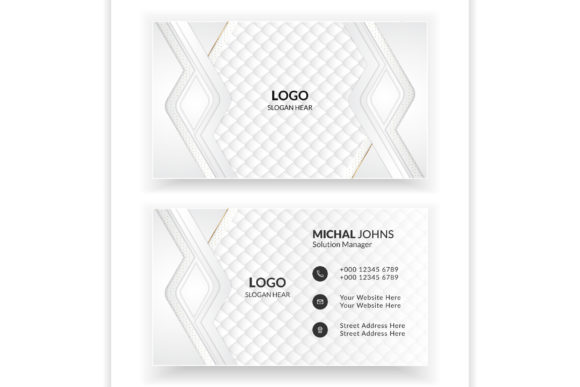
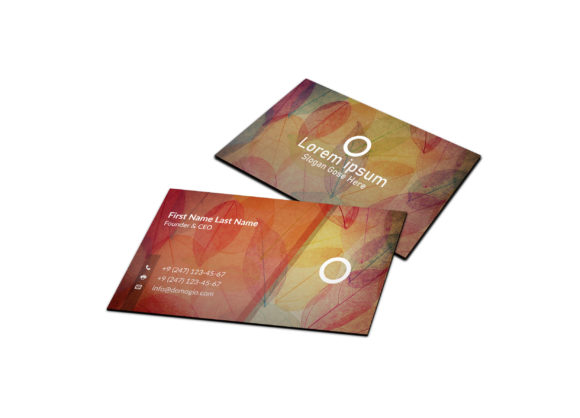
The core value of this template lies in its technical preparation. The package contains 300 dpi print-ready CMYK PSD files, which immediately removes the most common bottleneck in the design-to-print workflow: file conversion and resolution correction. For professionals, starting with a 300 DPI CMYK document ensures that color reproduction remains accurate when the file moves from the screen to the physical paper. The inclusion of the standard corporate dimension of 3.5”x2” with a 0.25” bleed is critical. The bleed area—the margin extending beyond the cut line—prevents white edges from appearing if the printing press cuts the paper slightly off-center. By having this pre-configured, the template safeguards the integrity of the final design, ensuring a clean, professional finish without requiring manual canvas adjustments.
Integration into the Design Workflow
Understanding where this template fits into a broader creative process is essential for maximizing efficiency. Typically, a design workflow moves through three phases: conceptualization, execution, and production. The Elegant Business Cards Templates Designs serves as the bridge between the execution and production phases.
For a freelancer or agency, the workflow often begins with a client brief and rough sketches. Once the concept is approved, the designer does not need to build the file structure from scratch. Instead, they import the approved elements into the Fully Layered AI EPS files provided. This integration allows the designer to focus entirely on aesthetics and layout rather than technical setup. The template acts as a scaffold, ensuring that the creative work adheres to the constraints of print manufacturing from the very beginning.
Pre-Press Preparation and Quality Control
Quality control is a significant concern in print production. A common error is designing in RGB color mode, which results in dull or shifted colors when converted to CMYK for printing. Because these templates are natively CMYK, the colors the designer sees on a calibrated monitor are a much closer approximation of the final printed result. This alignment facilitates a smoother approval process with clients and reduces the risk of costly reprints.
Furthermore, the Print Ready Format implies that the file structure is optimized for commercial presses. This includes proper flattening of layers or smart objects to ensure that transparency effects render correctly. By utilizing a template that has already been stress-tested for these technical requirements, the user mitigates the risk of production errors.
Customization and Editability
A rigid template offers little value in a dynamic business environment. The primary feature of this package is that it is Easy Customizable and Editable. The files are structured to accommodate a wide range of branding guidelines. Whether the user is a small business owner updating their contact information or a graphic designer overhauling a visual identity, the file architecture supports rapid changes.
The presence of Smart Objects within the Photoshop (PSD) files is a particularly valuable workflow feature. Smart Objects allow users to place artwork (such as a logo or a complex pattern) into the design without permanently altering the original pixel data. This non-destructive editing workflow means that if a client requests a change to the logo size or placement, the designer can simply double-click the Smart Object layer, make the adjustment, and see it update instantly across the card design. This capability saves significant time during the revision stage of a project.
Software Compatibility and Asset Management
The inclusion of Fully Layered AI EPS files ensures that the template is not locked into a single software ecosystem. While the PSD files are ideal for Photoshop users, the AI and EPS vector formats are crucial for those working in Adobe Illustrator or CorelDRAW. Vector formats are scalable without loss of quality, which is vital if the design elements need to be repurposed for other marketing collateral, such as letterheads, brochures, or signage.
For organizations managing multiple assets, this format variety aids in consistency. A marketing team can use the EPS file to extract the vector layout and apply it to a corporate flyer or email signature, ensuring that the brand language remains uniform across all platforms. The template becomes a central "source of truth" for the specific visual style of the business card, which can then be referenced for other design tasks.
Practical Implementation for Different Users
The application of Elegant Business Cards Templates Designs varies depending on the user's role within a business structure.
For the Entrepreneur and Small Business Owner:
Time is a scarce resource. These templates eliminate the learning curve associated with print layout software. The owner can focus on the content—verifying that the phone number is correct and the title is current—rather than worrying about margins and resolution. The "plug-and-play" nature of the template allows for a professional result without hiring a dedicated designer for every minor update.
For the Graphic Designer:
Templates serve as a time-management tool. Instead of spending billable hours setting up documents, the designer can allocate that time to creative exploration and client consultation. The template provides a professional baseline, which the designer then elevates through typography selection, color theory, and unique branding elements. It is a tool for efficiency, not a replacement for skill.
For Educators and Students:
In a learning environment, these files offer a practical case study in print production standards. Students can deconstruct the layers to understand how bleed, safe zones, and trim lines function in a real-world scenario. It demystifies the technical requirements of professional printing.
Long-Term Use and Scalability
Business needs evolve. A startup might rebrand after two years, or a professional might change their contact details. Because the files are Fully Layered, they are future-proof. The user does not need to recreate the design from scratch when an update is needed. They simply open the archived file, locate the relevant layer (e.g., "Phone Number" or "Job Title"), and edit the text.
This scalability extends to bulk production. If a company hires ten new employees, the HR or design department can use the template to generate ten distinct sets of cards in a fraction of the time it would take to design them individually. The consistency is guaranteed because the base design remains fixed, while only the variable data changes.
Conclusion: Optimizing the Physical Touchpoint
In an increasingly digital world, the tactile experience of a business card carries weight. It is often the first physical artifact a potential client receives from a business. By utilizing Elegant Business Cards Templates Designs, professionals ensure that this touchpoint reflects competence and attention to detail. The combination of print-ready specifications, layered editability, and cross-software compatibility makes this template a practical asset for anyone serious about their professional presentation. It streamlines the production process, reduces technical errors, and allows the user to focus on what matters most: the connection they make when they hand the card over.