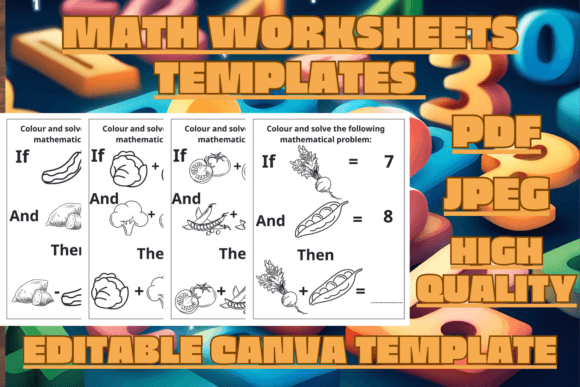
Engaging Math Worksheets Templates & Coloring Book
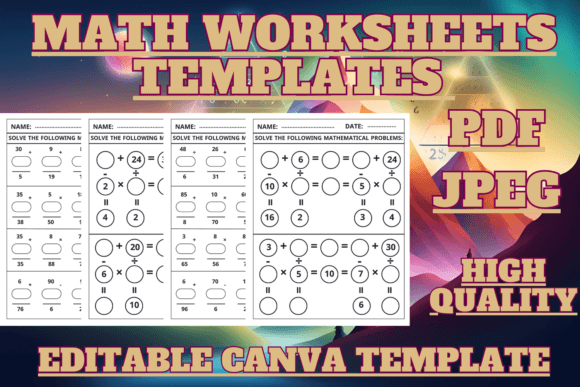
Finding the balance between rigorous education and genuine engagement is a constant challenge for creators and educators. When we look at early childhood learning, the gap between "drill work" and "play" often widens, leading to disinterest. However, there is a powerful middle ground where creativity meets curriculum. By integrating visual arts with arithmetic, specifically through Math Worksheets Templates and coloring activities, we can transform mundane practice into an immersive experience.
This specific approach focuses on the intersection of logic and creativity. It is not just about filling in numbers; it is about a multisensory experience where students color, solve puzzles, and calculate simultaneously. Imagine a worksheet where the solution to 15 - 7 determines the color of a specific segment of a watermelon, or where adding 3 + 4 decides the shade of an apple. This method leverages the "color by number" concept but elevates it into a legitimate mathematical tool.
The Intersection of Art and Arithmetic
For designers, educators, and content creators, this niche offers a rich playground. The concept is simple yet effective: students practice core operations—addition and subtraction—while engaging with a coloring book format. The subject matter, such as vegetables and fruits, adds a layer of educational value regarding healthy eating habits, making it a cross-curricular asset. The worksheets are designed to be high-quality, typically at 300 DPI, ensuring that whether you are printing them for a classroom or selling them as digital downloads, the crispness of the line art is preserved.
What makes this template style particularly useful is its versatility. It serves as an excellent resource for homeschooling parents looking to reduce screen time, for teachers needing "early finisher" activities, or for entrepreneurs in the educational printables market. The structure usually involves a grid or an illustration divided into sections, each labeled with a math problem. The legend at the top connects the sum or difference to a specific color (e.g., "Red = 10 to 12" or "Green = 5").
Creative Applications for Educators and Parents
If you are an educator or a parent, the utility of these templates extends beyond simple time-killers. They are strategic tools for assessment and reinforcement. When a student colors a blueberry red instead of purple, you immediately know they made a calculation error without needing to grade a formal test. It provides immediate, visual feedback in a low-stress environment.
Here are practical ways to adapt these Math Worksheets Templates for your specific needs:
- Thematic Unit Integration: Use the vegetable and fruit themes to accompany a science lesson on plants, nutrition, or biology. The math becomes the vehicle for learning about the subject matter.
- Differentiated Learning: If you have a mixed-ability classroom, you can assign the addition pages to beginners and the subtraction or mixed-operation pages to advanced students. Since the visual result looks similar, students don't feel singled out.
- Interactive Bulletin Boards: Have students complete the worksheets and cut out the fruits and vegetables to create a collaborative classroom mural. This fosters a sense of community ownership over the learning space.
The key to keeping this effective is clarity. Ensure that the color legend is distinct and that the math problems are legible. High-quality templates usually separate the workspace for the calculation from the area to be colored, preventing visual clutter.
Monetization and Product Design for Entrepreneurs
For freelancers, digital marketers, and small business owners, the market for educational printables is booming. Parents are actively searching for high-value, screen-free activities. A bundle of 20 pages focusing on addition and subtraction with a "Garden Harvest" theme is a highly sellable product.
When packaging these Math Worksheets Templates for sale or distribution, the delivery format matters. Providing a ZIP file containing PDFs, high-resolution JPEGs, and a Canva template link is the industry standard for premium digital goods. Here is why this packaging strategy works:
- PDF for Printing: This ensures the layout remains fixed, and the 300 DPI resolution guarantees professional print quality.
- JPEG for Flexibility: High-quality images allow users to insert the worksheets into presentations, use them on digital whiteboards (like Jamboard or Seesaw), or print them individually.
- Canva Template Link: This is the game-changer. By offering an editable template, you empower the user. Teachers can change the numbers to suit their curriculum, translate the text into another language, or adjust the difficulty level. This adds immense value to your product.
Designing for Engagement
The visual appeal of the coloring element cannot be understated. When designing or selecting these templates, look for bold, clean outlines. The fruits and vegetables should be recognizable but stylized enough to be fun to color. Avoid overly complex pixel art unless targeting older students; for early math learners, large sections are better for motor skill development.
Consider the "flow" of the worksheet. A good design guides the eye naturally from the problem to the calculation space, and finally to the coloring area. This logical flow reduces cognitive load, allowing the student to focus on the math rather than figuring out the instructions.
Expanding the Concept: Variations and Styles
While the standard format is effective, there is room for innovation. If you are a creator looking to stand out, consider these variations:
- Mystery Pictures: Instead of coloring a pre-drawn fruit, the numbers reveal a hidden pixel art image. This adds an element of surprise and gamification.
- Word Problem Integration: Instead of isolated equations, frame the math within a story. "The farmer picked 8 apples and gave 3 to his friend. Color the remaining apples red." This contextualizes the math, making it more applicable to real-world scenarios.
- Seasonal Rotations: Adapt the vegetable and fruit themes to seasons—strawberries in spring, corn in autumn, citrus in winter. This keeps your content relevant year-round if you are publishing on a blog or selling in a shop.
For those using these in a digital context, the JPEG files are perfect for "digital coloring." Students can use a tablet and a stylus to fill in the sections using apps like Procreate or GoodNotes. This hybrid approach—digital coloring on a math sheet—bridges the gap between traditional tactile learning and modern digital literacy.
Practical Tips for Implementation
To get the most out of these resources, organization is key. Whether you are a teacher organizing your lesson plan or a parent managing a homeschool schedule, keep the worksheets sorted by operation type (addition vs. subtraction) and difficulty level.
When introducing the activity, model the process first. Solve one problem together as a class. Show them how to find the sum, locate the color key, and apply the color neatly. Emphasize that the goal is not just to finish, but to be accurate. The coloring serves as a self-check mechanism; if the picture looks "wrong" (e.g., a blue banana), they know they need to revisit their calculations.
Finally, encourage creativity within the boundaries. While the math answers dictate specific colors, students can choose the intensity of the color or add background details. This fosters a sense of ownership and pride in their work. The combination of the rigid logic of math and the fluid expression of art creates a balanced educational experience that respects both the analytical and creative sides of the brain.
By utilizing high-quality Math Worksheets Templates