Optimizing Visual Strategy: The Role of Standardized Social Media Templates
In the contemporary digital landscape, the visual identity of a brand is rarely static; it is a fluid, constantly updating stream of content distributed across multiple platforms. For creators, business owners, and educators, the challenge lies not just in the creation of content, but in the rapid, consistent, and high-quality production of visual assets. This is where the utility of professional Social Media Templates becomes evident. By establishing a baseline of design standards, specifically using scalable vector formats like Adobe EPS, users can streamline their workflow while maintaining a distinct aesthetic edge.
The Technical Foundation: Understanding Adobe EPS and RGB Optimization
When discussing professional-grade digital assets, the file format is paramount. The specific requirement for an Adobe EPS (Encapsulated PostScript) file for Social Media Templates is a deliberate choice based on flexibility and quality preservation. Unlike raster-based formats such as JPEG or PNG, which are composed of a fixed grid of pixels, EPS files are vector-based. This means the graphics are defined by mathematical equations rather than pixel coordinates.
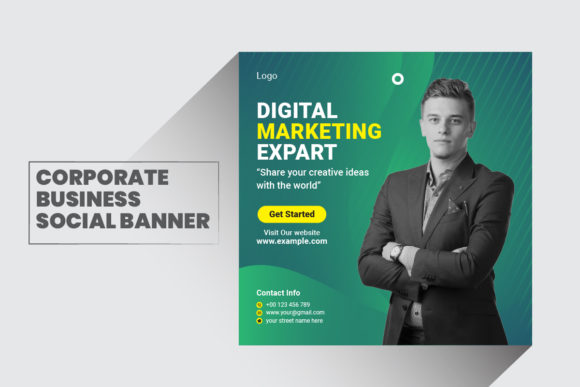
The significance of this vector capability cannot be overstated for digital branding. While the standard output size is often set at 1080×1080 pixels—a resolution perfectly suited for Instagram feeds and Facebook posts—there are instances where a creator might need to repurpose an asset. With a vector-based EPS template, scaling the design up for a digital billboard or down for a favicon does not result in the pixelation or loss of clarity that plagues raster files. The integrity of the lines, shapes, and text remains mathematically perfect regardless of the final export dimensions.
Furthermore, the specification of the RGB (Red, Green, Blue) color model is critical for digital-only applications. Unlike CMYK, which is used for physical printing and subtracts light from white paper, RGB is additive color used in digital screens. By utilizing Social Media Templates designed natively in RGB, users ensure that the colors displayed on a monitor match the vibrancy intended for the final social media post. This eliminates the "dulling" effect that often occurs when converting print-centric designs to digital formats, ensuring that the visual impact is immediate and engaging.
Workflow Efficiency and the Psychology of Customization
One of the primary bottlenecks in content creation is the "blank canvas" paralysis. For many hobbyists and professionals, the most time-consuming aspect of design is not the execution, but the conception of the layout. High-quality Social Media Templates serve as a structural scaffold. They provide the spatial arrangement—the balance between white space, imagery, and text—that has already been tested for visual appeal.
The ability to customize these templates using a standard Text Tool is a feature that bridges the gap between professional designers and the general public. When a template is fully editable, it allows for rapid iteration. A business owner can take a single design concept and adapt it for a "Flash Sale" on Monday and a "Customer Testimonial" on Tuesday without needing to understand complex layer masking or clipping paths. The focus shifts from technical execution to strategic messaging.
Consider the workflow of an educator creating weekly announcements. Instead of recreating a graphic from scratch, they utilize a pre-designed Social Media Template. Because the text is editable, they simply swap out the lesson topic. Because the file is an EPS, they can be assured that the typography remains crisp even if they resize it for a presentation slide versus an Instagram story. This reduction in friction leads to a higher frequency of posting, which is a key metric in algorithmic visibility on social platforms.
Typography and Readability in Digital Spaces
A critical component of the specification for these assets is the inclusion of free fonts. Typography is often the first barrier to entry for new creators. Licensing fonts can be expensive and legally complex. By bundling Social Media Templates with fonts that are free for commercial use, the asset becomes immediately accessible. This democratizes design, allowing small business owners and independent creators to compete visually with larger entities that have dedicated design budgets.
However, the presence of the font is only useful if the text is editable. Static text layers flatten the usability of a template. Fully editable text layers allow users to adjust kerning (the space between letters) and leading (the space between lines) to fit their specific copy. For example, a headline in English might fit perfectly, but a translation into German, which often uses longer compound words, would require adjustment. Editable Social Media Templates accommodate this linguistic flexibility, making them valuable assets for global brands and multilingual communities.
Visual Consistency and Brand Authority
From a psychological perspective, consistency breeds familiarity, and familiarity breeds trust. When a user encounters a brand on social media, they subconsciously process the visual cues—the color palette, the font choice, the layout structure—faster than they read the text. If a brand’s feed is disjointed, with varying styles and color temperatures, it can create a sense of disorganization or unreliability.
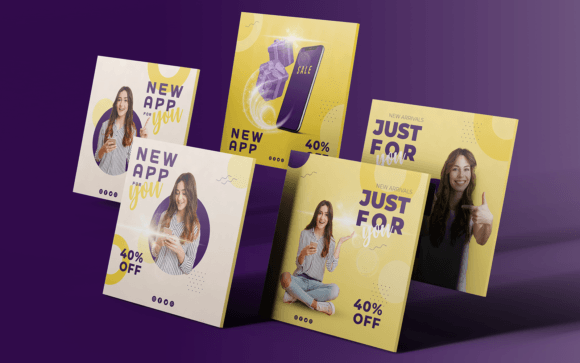
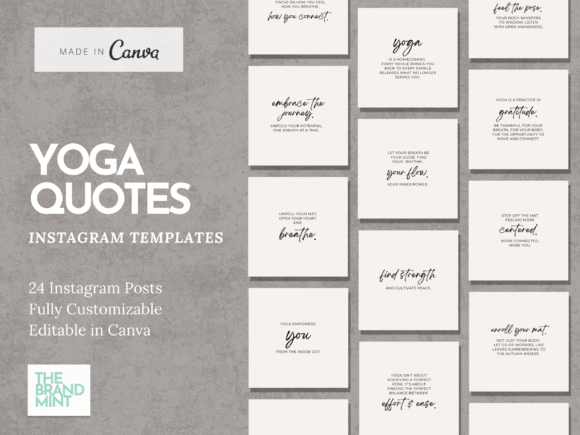
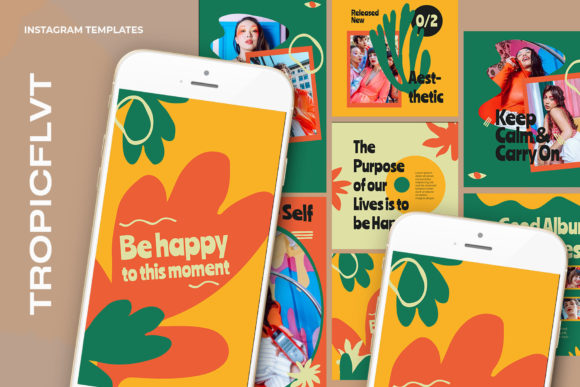
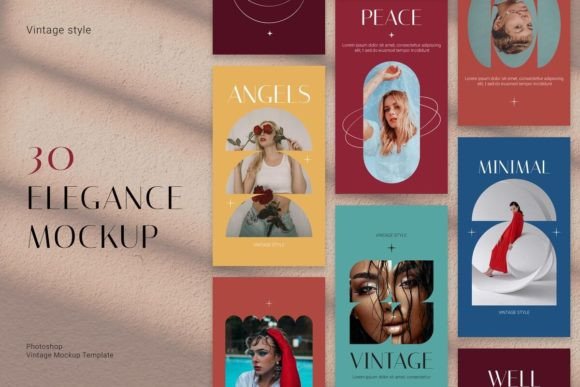
By utilizing a cohesive set of Social Media Templates, creators enforce a visual rhythm. This is particularly important for the 1080×1080 pixel format, which dominates the "grid" view on platforms like Instagram. When a user visits a profile page, they see a 3x3 or larger grid of images. If those images utilize consistent templates—perhaps alternating between a photo-centric layout and a text-centric quote layout—the grid itself becomes a piece of art. This curated aesthetic is a powerful tool for converting casual browsers into followers.
Moreover, the psychological impact of professional design extends to the creator's mindset. Working with high-quality EPS files often encourages a more thoughtful approach to content. The ease of use provided by the Text Tool and the clean aesthetic of the template can boost the creator's confidence in their output, leading to more authentic and enthusiastic engagement with their audience.
Practical Applications Across Diverse Sectors
The versatility of standardized Social Media Templates allows them to be adapted across a wide variety of industries and use cases.
- Retail and E-commerce: Retailers can use these templates to highlight product features. The editable text allows for quick updates regarding pricing or specifications, while the high-resolution vector format ensures product graphics look sharp.
- Corporate Communication: Internal communications teams can use these assets to announce policy changes or celebrate employee milestones. The professional look of an EPS-based template elevates internal memos to feel like official corporate announcements.
- Event Promotion: For event organizers, the ability to quickly change text is vital for countdowns ("3 Days Left") or speaker announcements. The consistent visual style helps build recognition for the event brand leading up to the date.
- Education and Non-Profits: These sectors often operate with limited resources. The availability of free fonts and easy-to-edit text tools within the templates allows these organizations to produce high-quality awareness campaigns or educational infographics without hiring a freelancer.
Technical Considerations for Asset Management
While the ease of use is a primary selling point, users must also consider the technical environment in which they operate. Adobe EPS files are robust, but they require software capable of handling vector data. While Adobe Illustrator is the native environment, many other modern design tools can import and edit EPS files effectively.
It is also important to note the specification that photos are not included in the main file. This is a standard practice in the template industry to keep file sizes manageable and to avoid licensing issues related to stock photography. For the user, this means the template serves as a "frame." The success of the final design depends on the user providing high-quality photography to fill that frame. A well-designed template cannot save a low-resolution or poorly composed photograph. Therefore, the template acts as a complement to the user's own content library, enhancing it rather than replacing it.
The Future of Modular Design
As social media platforms evolve, the demand for speed and quality will only increase. The concept of the "modular" design—where users assemble pre-made components like LEGO bricks—is becoming the standard. Social Media Templates fit perfectly into this paradigm. They are not just static images; they are functional tools designed to solve specific communication problems.
By focusing on the technical merits of vector formats, the usability of text editing, and the strategic importance of visual consistency, users can leverage these assets to build a stronger digital presence. Whether for a multinational corporation or a personal blog, the principles remain the same: clarity, consistency, and quality are the currencies of the digital age. Utilizing professional-grade templates is a pragmatic step toward achieving those goals efficiently.